
How is Japanese Popular Culture Linked to its Art?
Japanese popular culture and its art are inextricably linked, with contemporary art practices often reflecting, critiquing, and drawing inspiration from the multifaceted dimensions of popular culture. This essay will explore this interconnection by examining the insights provided by Eric Shiner, Noi Sawaragi, Gennifer Weisenfeld and Midori Matsui. Each scholar provides a unique perspective on how traditional and modern elements of Japanese culture merge within contemporary art, illustrating the dynamic relationship between popular culture and artistic expression.
Eric Shiner’s essay “Fashion Altars, Performance Factors, and Pop Cells: Transforming Contemporary Japanese Art, One Body at a Time” delves into how contemporary Japanese artists utilise elements of fashion, performance, and pop culture to transform art.[1] Shiner argues that fashion in Japan is not merely a commercial enterprise but a form of artistic expression that challenges traditional boundaries between art and everyday life. Artists like Takashi Murakami and Yasumasa Morimura incorporate fashion elements into their work, creating what Shiner calls “fashion altars” where garments become symbolic and expressive tools. Performance art, heavily influenced by traditional Japanese theatre forms such as Noh and Kabuki, also plays a significant role. Artists use their bodies as canvases to explore themes of identity, beauty, and societal norms. The integration of pop culture motifs, particularly those from manga, anime, and J-pop, into fine art (referred to by Shiner as “pop cells”) further exemplifies this blending of high and low culture. These elements make contemporary Japanese art accessible and as a result resonate with both local and global audiences, illustrating a seamless fusion of popular culture and artistic practice.
Furthermore, Noi Sawaragi’s essay “On the Battlefield of ‘Superflat’: Subculture and Art in Postwar Japan” in Little Boy: The Arts of Japan’s Exploding focuses on the concept of Superflat, a term coined by Takashi Murakami.[2] Superflat art is characterized by its visual flatness and its critique of the superficiality and consumerism in Japanese society. Sawaragi explains how Superflat blurs the lines between fine art and popular culture by incorporating elements of manga, anime, and commercial design into its aesthetic framework. Murakami’s work exemplifies this approach by juxtaposing traditional Japanese artistic techniques with contemporary pop culture imagery. The Superflat movement critiques the commodification of culture, yet it also engages with it by using popular motifs that are instantly recognisable and relatable. This duality allows Superflat artists to comment on and subvert the pervasive consumer culture while simultaneously participating in it.
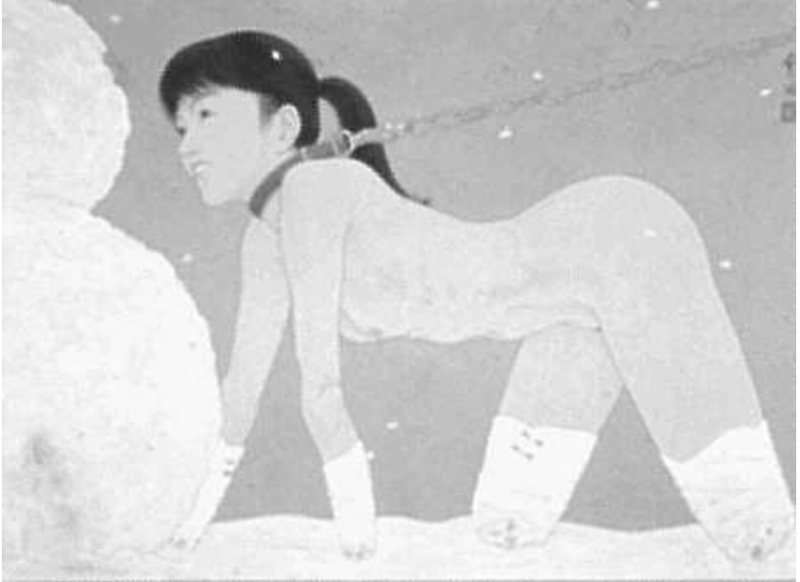
It is also interesting to examine Gennifer Weisenfeld’s essay “Reinscribing Tradition in a Transnational Art World” from Asian Art History in the Twenty-First Century as it explores how contemporary Asian artists, including those from Japan, navigate the global art scene by drawing on traditional elements.[3] Weisenfeld argues that these artists do not merely reference tradition nostalgia but transform it in innovative ways that speak to both Japanese and global audiences. Artists incorporate traditional motifs, techniques, and themes within contemporary art practices, creating a bridge between the past and present. This process of reinscribing tradition allows artists to assert their cultural identity within a transnational context, highlighting the fluidity and adaptability of cultural heritage in contemporary art. This approach reflects a broader trend in Japanese art where popular culture, with its roots in traditional practices, is continuously reinterpreted and transformed. We see this similar approach in Makoto Aida’s Dog (Snow), 1998, figure 1.[4] Here he has used traditional Japanese style to paint deliberately confrontational subjects of a nubile nude crawling along with a leash around her neck. Nicholas Bornoff in the essay “Sex and Consumerism: the Japanese State of the Arts” in Consuming Bodies: Sex and Contemporary Japanese Art posits that “what makes the picture stand out is not just that she is pretty and overtly sexy, nor even that she looks a tad under the age of consent – which is not unusual in Japan. What really hits home is that she happens to be an amputee and advances daintily forth on the bandaged stumps at her knees and wrists. Perfectly outrageous; perfectly in tune with the times. This stuff is confrontational and sexy, and it sells”.[5]
idori Matsui builds on this in the essay “The Place of Marginal Positionality: Legacies of Japanese Anti-Modernity” in Consuming Bodies: Sex and Contemporary Japanese Art by examining how marginality and anti-modernity influence contemporary Japanese art.[6] Matsui explores how artists adopt marginal positions to critique modernity and Western influence, using unconventional materials and techniques that challenge artistic conventions. Matsui’s analysis highlights how contemporary artists engage with themes of gender, identity, and societal norms through their marginal status. This engagement often incorporates elements of popular culture, which itself can occupy a marginal position within the broader cultural landscape. By embracing and transforming these elements, artists create works that offer powerful critiques of contemporary society while drawing on the rich cultural tapestry of Japan’s popular and traditional arts.
The interplay between Japanese popular culture and contemporary art is multifaceted. Through fashion, performance, pop culture motifs, and the reinscription of tradition, contemporary Japanese artists create works that reflect, critique, and transform societal norms and cultural heritage. The insights from Eric Shiner, Noi Sawaragi, Gennifer Weisenfeld, and Midori Matsui illustrate how contemporary art practices in Japan are deeply intertwined with popular culture, offering a dynamic commentary on both local and global scales. This interconnection not only enriches the art itself but also provides a profound reflection on the cultural identity and societal values of contemporary Japan.
Bibliography
Bornoff, N. (2004). Sex and Consumerism: the Japanese State of the Arts. In F. Lloyd, Consuming Bodies: Sex and Contemporary Japanese Art (pp. 41-68). Reaktion Books, Limited.
Matsui, M. (2004). The Place of Marginal Positionality: Legacies of Japanese Anti-Modernity. In F. Lloyd, Consuming Bodies : Sex and Contemporary Japanese Art (pp. 142-165). Reaktion Books, Limited.
Sawaragi, N. (2005). On the Battlefield of “Superflat”: Subculture and Art in Postwar Japan. In T. Murakami, Little boy: the arts of Japan’s exploding subculture = Ritorubōi (pp. 187–205). New York; New Haven, Conn; London: Japan Society; Yale University Press.
Shiner, E. (2011). Fashion Altars, Performance Factors, and Pop Cells: Transforming Contemporary Japanese Art, One Body at a Time. In J. T. Rimer, Since Meiji : Perspectives on the Japanese Visual Arts, 1868-2000 (pp. 168-190). Hawaii: University of Hawaii Press.
Weisenfeld, G. (2007). Reinscribing Tradition in a Transnational Art World. In V. N. Desai, Asian art history in the twenty-first century (pp. 181-198). Williamstown, Mass; New Haven: Sterling and Francine Clark Art Institute; Distributed by Yale University Press.
[1] Shiner, E. (2011). Fashion Altars, Performance Factors, and Pop Cells: Transforming Contemporary Japanese Art, One Body at a Time. In J. T. Rimer, Since Meiji : Perspectives on the Japanese Visual Arts, 1868-2000 (pp. 168-190). Hawaii: University of Hawaii Press.
[2] Sawaragi, N. (2005). On the Battlefield of “Superflat”: Subculture and Art in Postwar Japan. In T. Murakami, Little boy: the arts of Japan’s exploding subculture = Ritorubōi (pp. 187–205). New York; New Haven, Conn; London: Japan Society; Yale University Press.
[3] Weisenfeld, G. (2007). Reinscribing Tradition in a Transnational Art World. In V. N. Desai, Asian art history in the twenty-first century (pp. 181-198). Williamstown, Mass; New Haven: Sterling and Francine Clark Art Institute; Distributed by Yale University Press.
[4] Bornoff, N. (2004). Sex and Consumerism: the Japanese State of the Arts. In F. Lloyd, Consuming Bodies: Sex and Contemporary Japanese Art (pp. 41-68). Reaktion Books, Limited.
[5] Bornoff, N. (2004). Sex and Consumerism: the Japanese State of the Arts. In F. Lloyd, Consuming Bodies: Sex and Contemporary Japanese Art (pp. 41-68). Reaktion Books, Limited.
[6] Matsui, M. (2004). The Place of Marginal Positionality: Legacies of Japanese Anti-Modernity. In F. Lloyd, Consuming Bodies : Sex and Contemporary Japanese Art (pp. 142-165). Reaktion Books, Limited.
 Noticing Art